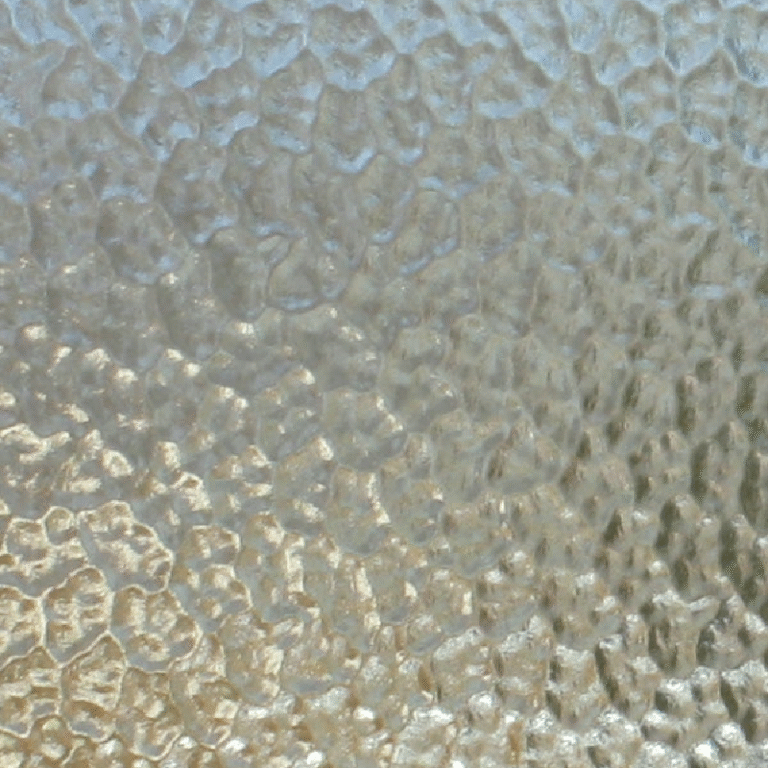
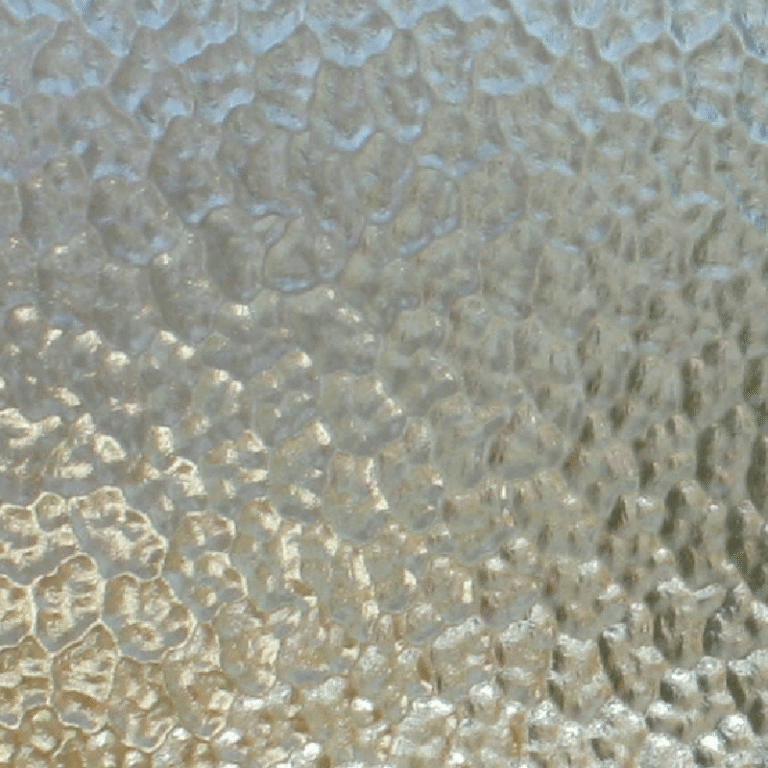
CATHEDRAL PATTERNED GLASS
Cathedral is a softly rippled patterned glass. The texture is irregular and flowing, obscuring vision while keeping a light, open feel. It is less aggressive than the finer privacy patterns, so it suits situations where you want to break up the view rather than block it entirely.
Common uses are internal doors, side lights, stair and hallway partitions, cabinet fronts and decorative panels. Cathedral glass is also one of the most frequent replacement items in older Australian homes, where it was widely used in doors and windows through the mid twentieth century.
Availability
We stock Cathedral in 4mm, cut to your measurements. That is the weight used in the great majority of original door and window panels, so it is usually what you need for a like-for-like replacement.
If your existing pane is thicker, or the panel is unusually large, contact us before ordering and we will tell you honestly what we can source.
Replacing a pane in an older home
This is what Cathedral is most often bought for, and it is worth taking a little care.
Measure the existing glass rather than the frame opening, at the widest point. Photograph the old pane before you order, ideally with something for scale beside it. Rippled and textured patterns look alike in a catalogue but are straightforward to distinguish side by side, and getting it right matters far more than getting it fast — a mismatched panel in a run of matching ones is immediately obvious.
If the original glass is beyond recognition, send us the photo anyway. We would rather tell you it is not a pattern we carry than sell you something that does not match.
How much privacy does Cathedral give?
Moderate. It distorts shapes and makes detail unreadable, but it is not a privacy glass in the way the finer patterns are. Someone standing directly against it will still register movement and rough form.
For a bathroom or toilet window, Satinlite obscures considerably more and is the better choice. For a hallway, an internal door or a stair partition, where you want light and a sense of openness rather than concealment, Cathedral is exactly right.
Our third pattern, Spotswood, sits between the two with a distinct linear texture. All three are listed together under patterned glass.
Which way round does it go?
The pattern sits on one face and the reverse is smooth. Fit the patterned face inward, where it is handled less and stays easier to clean. The smooth side wipes down without catching in the texture.
Safety glass requirements
Any Cathedral panel used in a door, beside a door, in a bathroom, or below 500mm from floor level must be safety glass under Australian Standards. Patterned glass is not safety glass in itself.
This catches a lot of people replacing original panels, because the glass that sat there for fifty years would not meet today’s requirement. Tell us where the panel is going and we will talk through a toughened or laminated alternative before you order. Toughening must be specified up front, since toughened glass cannot be cut or drilled afterwards.
Cut to size, edged to order
Every Cathedral panel is cut to your exact measurements in our Melbourne workshop and delivered free across Melbourne. Choose polished edges wherever the edge will be visible or handled; an unpolished cut edge suits only those positions where it sits fully hidden inside a frame or channel.
Enter your dimensions in millimetres on the product below for an immediate price.
What Cathedral glass costs
- 4mm Cathedral — $181 per m², the lowest-priced pattern we stock
- Toughening from $25 per m², polished edges from $10 per linear metre
- Minimum $99 per piece. Free delivery across Melbourne metro and Geelong.
Type your width and length on the product above and the price appears as you type — no quote request.
A note on the name
In Australia, Cathedral is the trade name for this rolled obscure glass with a soft rippled texture — the kind found in bathroom windows and internal doors in homes built through the twentieth century. Overseas, and in stained-glass supply, “cathedral glass” often means coloured art glass sold in sheets for leadlight work. That is a different product and not something we supply. If you landed here looking for coloured leadlight sheet, we cannot help — but if you are matching a rippled obscure pane in a Melbourne house, you are in the right place.
Common questions
How much privacy does it give?
The least of the three patterns we stock. The ripple is soft, so it blurs shapes without fully obscuring them. For a bathroom window where privacy matters more than looks, Satinlite is the better choice; for a linear look, Spotswood.
Only 4mm?
Yes — 4mm is the thickness this pattern is rolled in, and it is what almost every existing Cathedral pane in an older home will be. For a door or a panel that needs more weight, choose a different pattern in 5mm or 6mm, or have the 4mm toughened.
Replacing a broken pane?
Photograph the existing glass against a plain background with a ruler or coin in shot for scale, and measure the glass rather than the frame opening — see identifying patterned glass in an older home and measuring for replacement window glass.
Does it need to be toughened?
In a door, beside a door, in a shower, or with glass below 500mm from floor level — yes, under AS 1288. See when Australian Standards require safety glass.
We do not provide structural or engineering advice — confirm thickness and glass type with your installer or a qualified professional before ordering.