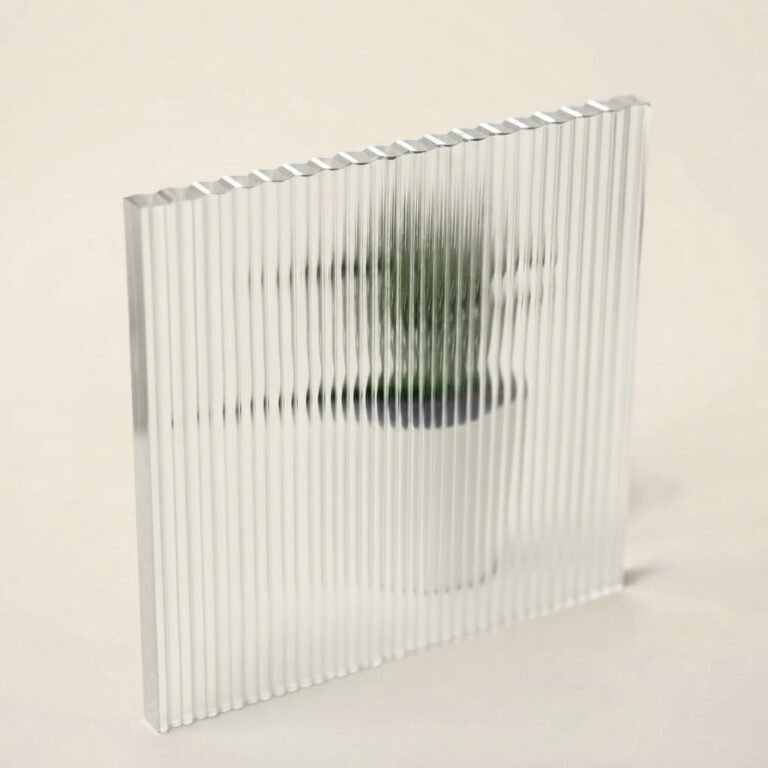
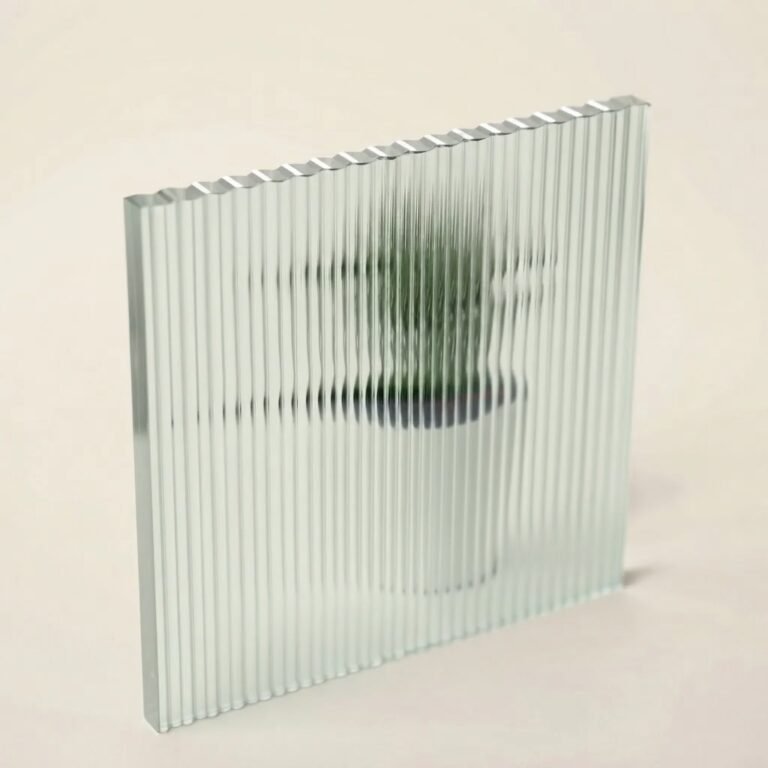
Narrowline, narrow line, narrow reed — what is the difference?
None. Narrowline is the Australian trade name; people search for it as narrow line glass, narrow reed glass and narrow reeded glass, and overseas it is usually called fluted glass. They all describe the same product: closely spaced vertical ridges rolled into one face of the sheet. What separates it from traditional reeded glass is only the pitch — the reeds sit roughly 8–10mm apart instead of 20mm or more.
Narrowline vs traditional reeded glass
| Narrowline | Traditional reeded |
|---|
| Reed spacing | Fine, closely spaced | Wide, pronounced |
| Privacy | Higher — more ridges break up the image | Moderate |
| Look | Contemporary, subtle | Period, decorative |
| Small panels | Works well — many reeds across a narrow door | Poor — only two or three reeds fit |
| Typical use | Kitchen and joinery doors, shower screens, partitions | Heritage windows, feature panels |
What it costs
Nothing here is a quote-on-request item — type your size into any product above and the price appears as you type. For reference, the rates are:
- 6mm Narrowline — from $219 per m²
- 10mm Narrowline — from $365 per m²
- 5mm Narrowline in low iron (no green tint) — from $468 per m²
- Polished edges from $10 per linear metre; toughening from $17 per m²
- Minimum billable area 0.5 m² per panel
Delivery across Melbourne metro, inner Geelong and metropolitan Sydney is included in the price.
Common questions
Can Narrowline be toughened?
Yes, in both 6mm and 10mm. Anything used in a shower screen, a door, or a panel with glass below 500mm from floor level must be toughened under AS 1288 — see our guide on when Australian Standards require safety glass.
Which way do the reeds run?
One way only, and we cut to whichever direction you specify. For cabinet doors that is almost always vertical. Tell us in the order notes whether the reeds should follow the height or the width.
Which side faces out?
The ridged face normally goes inward on a cabinet door (so the flat side wipes clean on the outside) and outward on a shower screen (so water runs down the flat inner face). More detail in which side of patterned glass faces out.
Does it come without the green tint?
Yes — the 5mm low iron version above. Standard float glass concentrates its green tint in the thick part of every ridge, which on a large panel in strong light reads as faint green striping. Low iron removes it. See low iron vs standard clear glass.
How big can a panel be?
The sheet limits the reed direction, so very wide panels may need the reeds running the other way, or joining. Send your sizes through and we will tell you before you order.
We do not provide structural or engineering advice — for shower screens, doors and any application covered by AS 1288, confirm the thickness and glass type with your installer or a qualified professional before ordering.