Other glass we cut to size
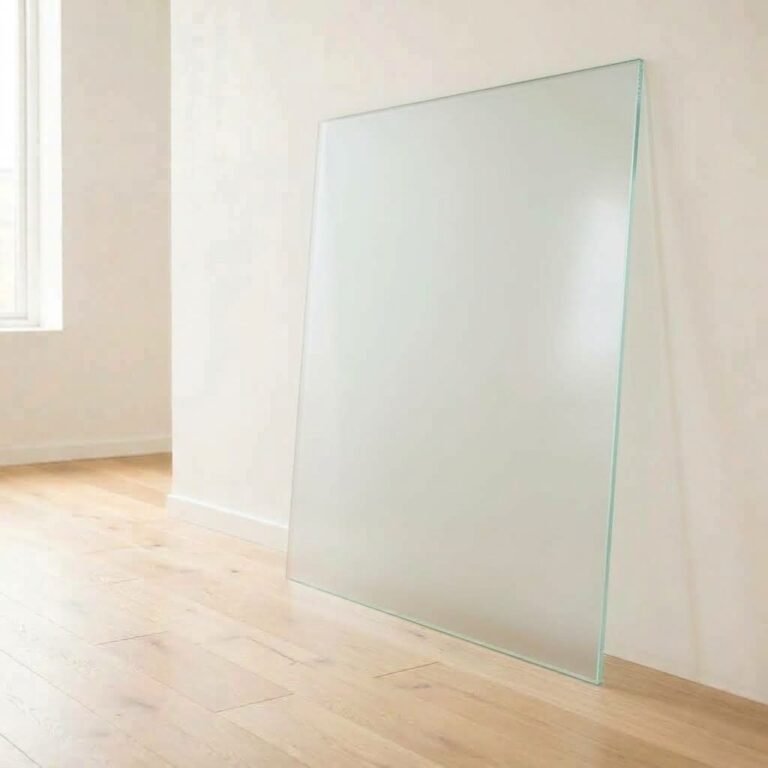
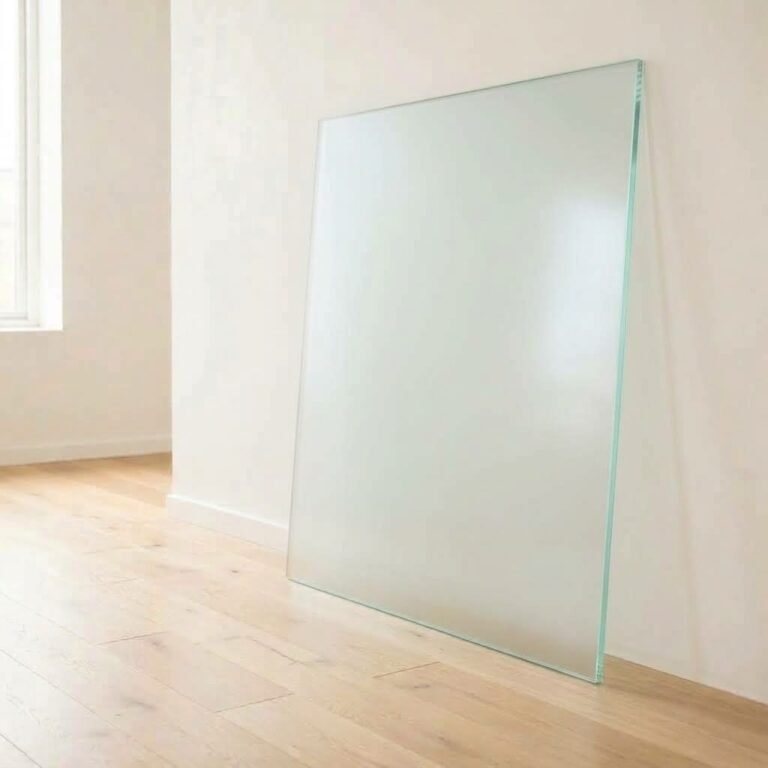
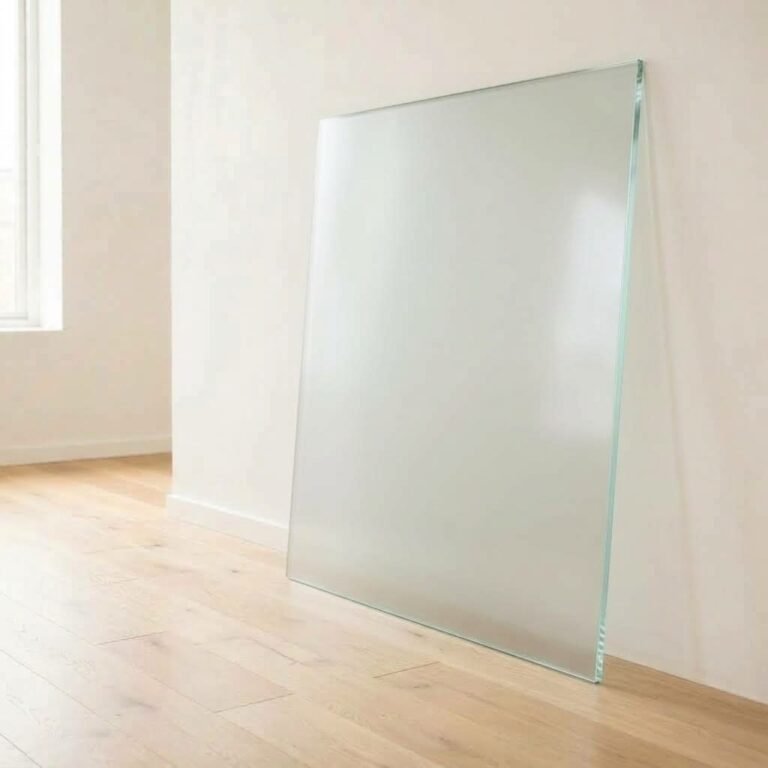
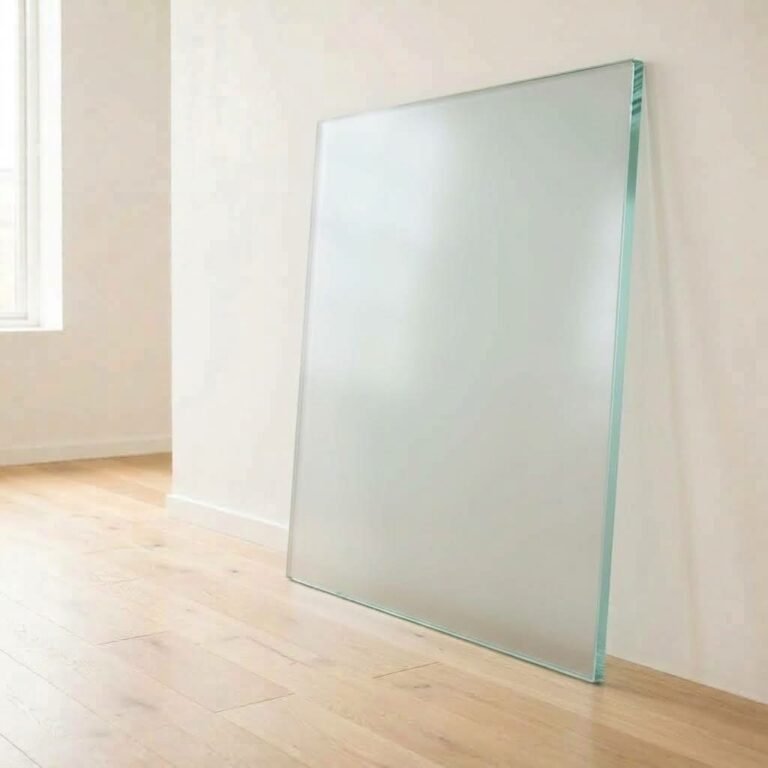
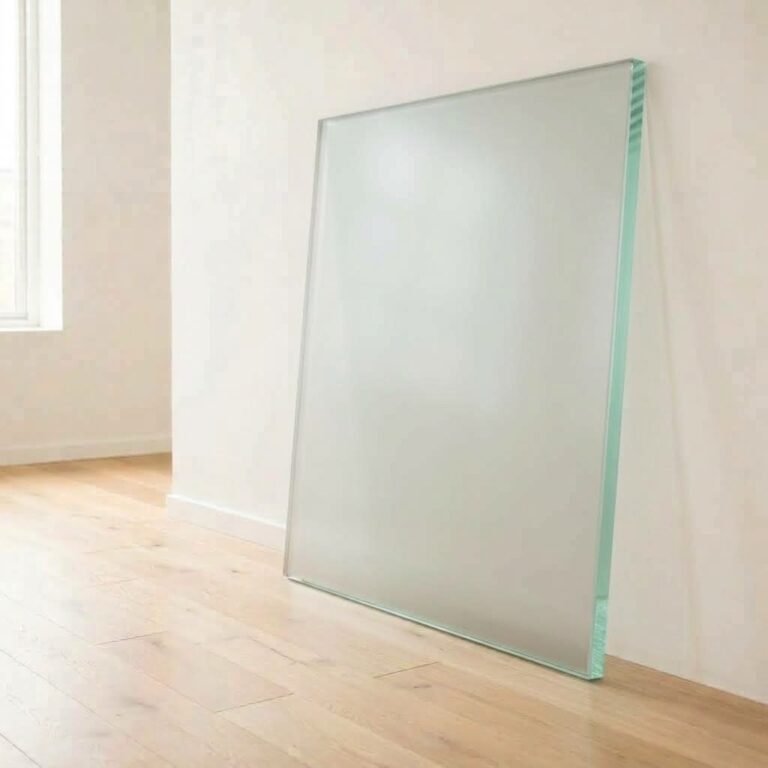
Frosted glass gives you privacy while still letting light through. The surface scatters light so shapes behind it are obscured but the room stays bright. It is the standard choice for bathroom windows, internal doors, office partitions and anywhere you want separation without darkness.
Our frosted range is acid etched rather than sandblasted. Acid etching produces an even, smooth surface that resists fingerprints and cleans easily, where sandblasted glass has a more open texture that tends to mark and go patchy over time. The etched face is one side only; the reverse stays smooth. Many builders and suppliers call acid etched glass Matelux, after a well-known brand. If your plans or quote say Matelux, acid etched glass is what you are looking for.
Frosted glass prices at a glance
| Panel size | 4mm | 6mm | 10mm |
|---|---|---|---|
| 450 × 600 mm | $181.80 | $201.30 | $242.70 |
| 600 × 900 mm | $201.94 | $223.00 | $270.64 |
| 600 × 900 mm, toughened | $213.28 | $234.34 | $303.04 |
| 900 × 1800 mm, toughened | $495.04 | $558.22 | $749.92 |
Prices from our online calculator for rectangular panels with polished edges, delivery to Melbourne metro, inner Geelong and metropolitan Sydney included. Panels under 0.5 m² are priced as 0.5 m². Prices checked October 2026 — enter your exact sizes on the product page for your price.
More about this glass, delivery & FAQs
What frosted glass costs
Every panel is priced from its size, so the price updates as you type your width and height in millimetres. Rates per square metre for acid etched frosted glass:
- 4mm acid etched — $211 per m²
- 5mm acid etched — $231 per m²
- 6mm acid etched — $250 per m²
- 10mm acid etched — $316 per m²
- 12mm acid etched — $331 per m²
Polished edges and toughening are options on each product page. Each panel is charged at a minimum of 0.5 m².
Which thickness?
4mm, 5mm and 6mm suit window glazing, cabinet fronts and internal panels. 10mm and 12mm are the weights used for frameless shower screens and door panels, where the glass carries its own load and also needs to be toughened.
Other ways to get a frosted look
Acid etched glass is the smoothest, most even frosting. If you want privacy with some texture, or a safety glass that looks frosted, these are the alternatives:
- Satinlite — a fine, even obscure pattern and the most private of the patterned glasses. 4mm, 5mm and 6mm, from $228 per m².
- Spotswood — a light linear texture that is common in older Melbourne homes. 4mm, 5mm and 6mm, from $200 per m².
- Cathedral — a hammered, rippled texture, often needed to match existing windows. From $178 per m².
- Narrowline reeded — vertical flutes for cabinet doors, shower screens and partitions.
- 6.38mm translucent laminate — two clear panes bonded with a white interlayer. It looks frosted and holds together if broken, which suits low windows and doors.
Not sure which one you have or need? Our guide to frosted vs patterned glass compares them side by side.
Safety glass rules
If a frosted panel will be used in a door, beside a door, in a bathroom, or anywhere below 500mm from floor level, Australian Standards require safety glass. Specify toughening at the time you order, as glass cannot be cut once toughened. See when you need safety glass for the details.
Common questions
Is frosted glass the same as acid etched glass?
"Frosted" describes the look. It can be made by acid etching, sandblasting or applying a film. All of the frosted glass we sell is acid etched, which gives the most even finish and does not wear off.
Which side of frosted glass faces out?
In a shower or bathroom, the smooth face usually goes on the wet side so it is easy to wipe. In windows, the etched face normally goes inside. Our which side faces out guide covers each case.
How private is it?
Acid etched glass hides detail completely while letting through soft light. At night with a light on, you will see a blurred shape close to the glass, but no detail. Satinlite is similar; Spotswood and reeded glass are less private.
Do you deliver?
Yes. Glass is cut to order and delivered across Melbourne metro, inner Geelong and metropolitan Sydney.
Compare patterned and frosted glass
Tap a photo to see that glass and its prices. If you are matching an old window, compare the texture and how much you can see through it, then check the thickness at the edge of the old pane.
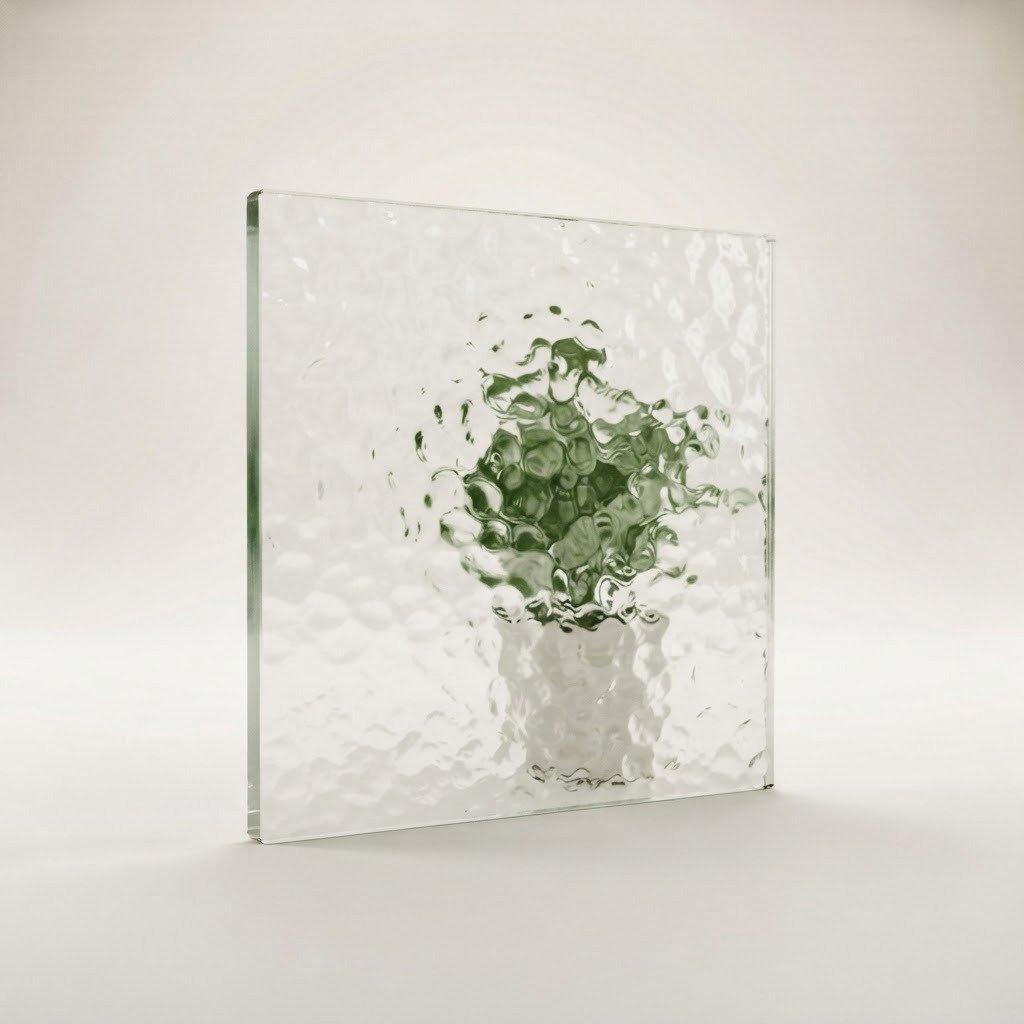
Cathedral
Soft wavy texture. Medium privacy. 4mm.
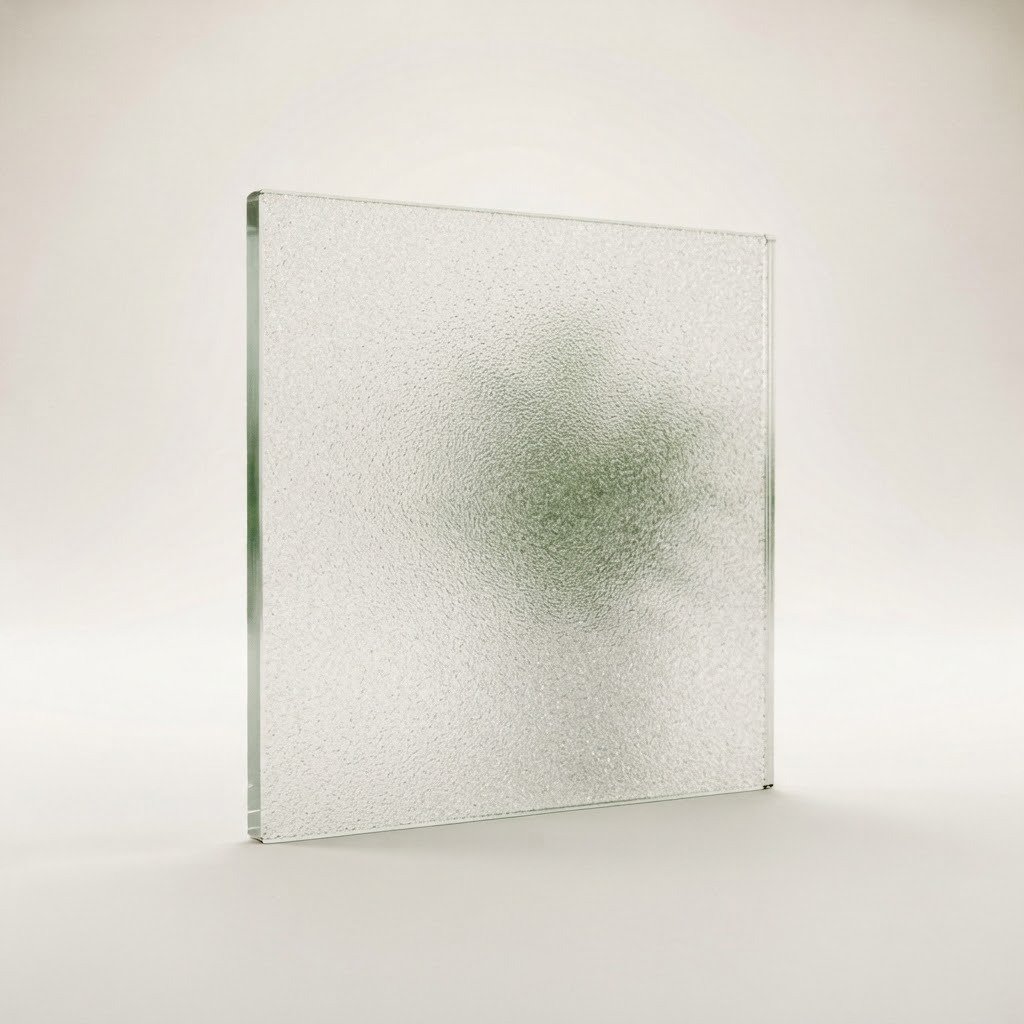
Spotswood
Fine linear texture. Good privacy. 4–6mm.
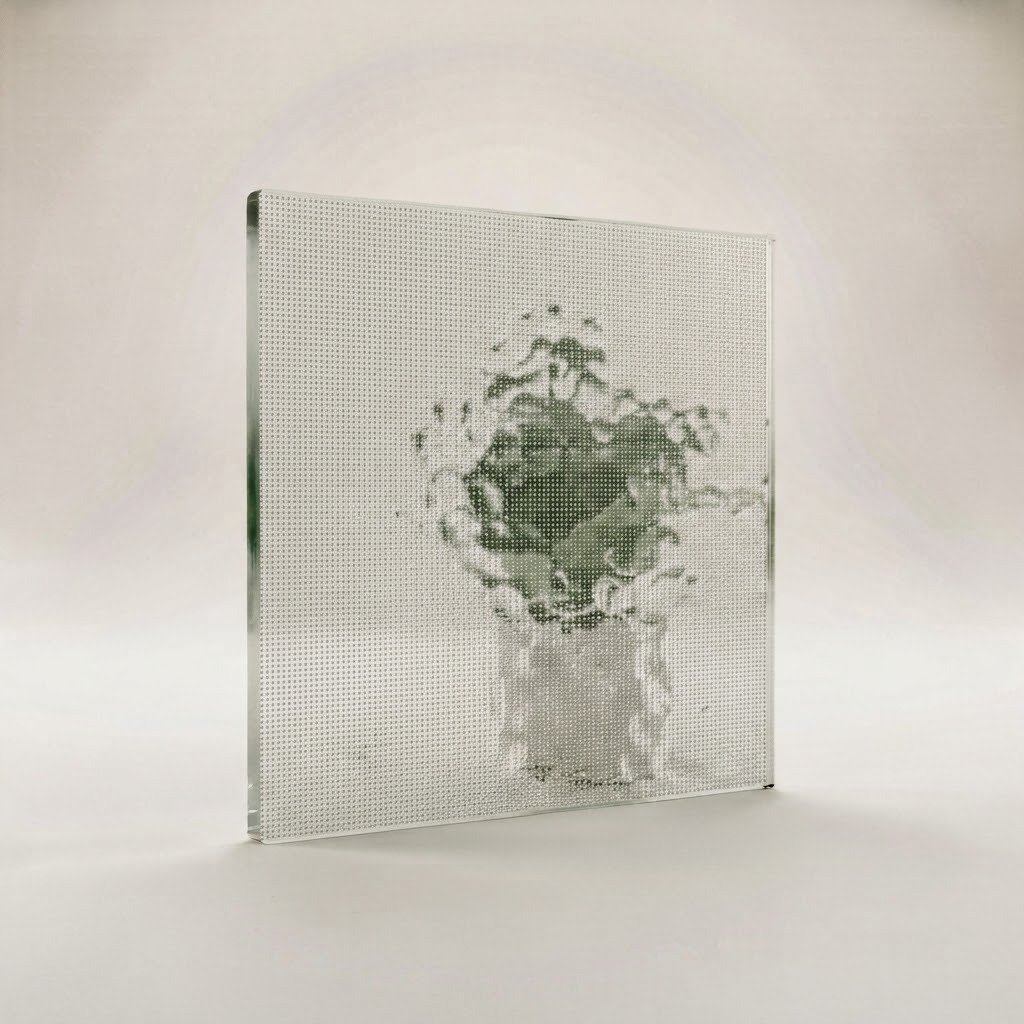
Satinlite
Fine satin texture. High privacy. 4–6mm.
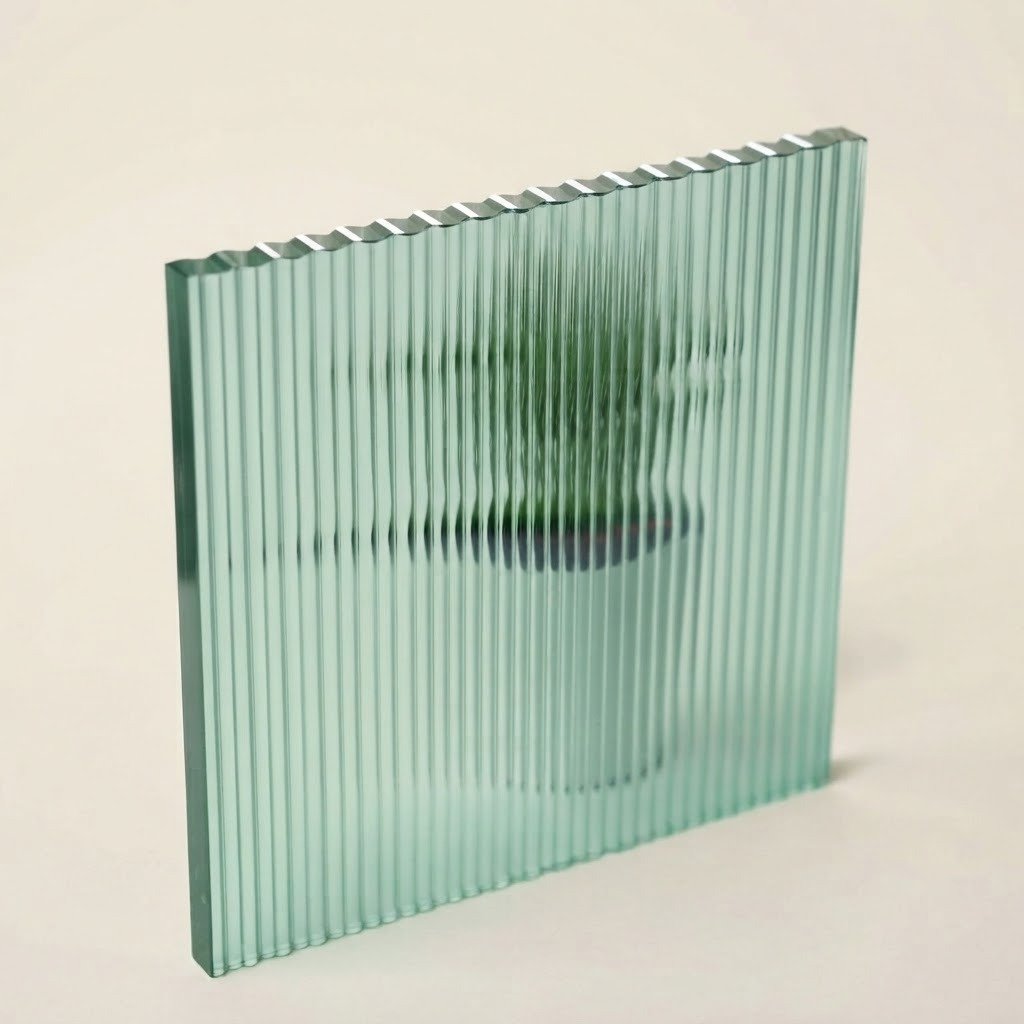
Narrowline reeded
Vertical ribs. Blurs shapes, lets light through.
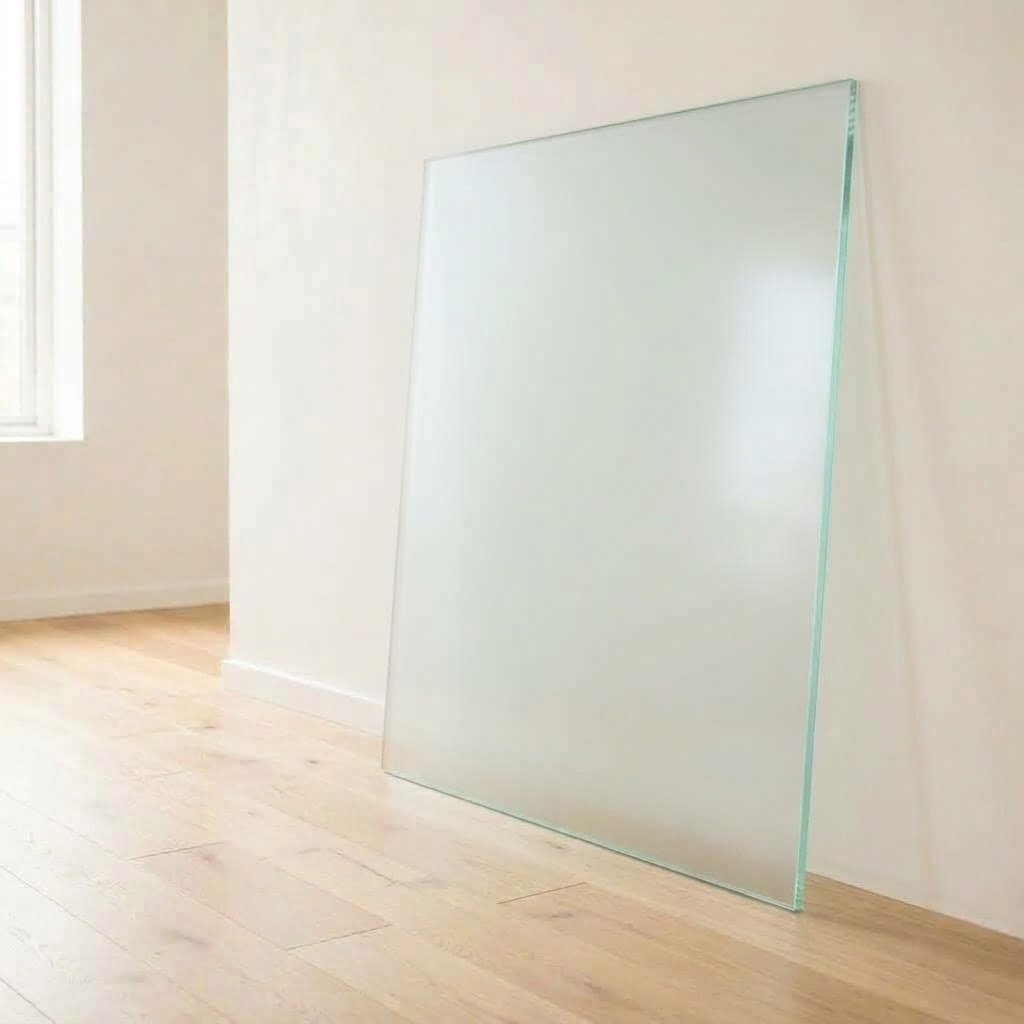
Acid etched (frosted)
Smooth, even white. Highest privacy.
Common frosted glass jobs
- Bathroom window: 4mm or 5mm acid etched, toughened if it is low or near the bath.
- Front door sidelight: 6mm toughened.
- Frameless shower panel: 10mm toughened, polished edges. See shower screen glass.
- Office partition: 10mm or 12mm toughened.
- Splashbacks and cabinet doors: 6mm toughened for a soft white look.
Frosted, Satinlite or reeded?
All three let light through and block the view. Acid etched frosted glass is smooth and even and gives the most privacy. Satinlite is a patterned glass with a fine texture, common in older homes. Reeded (narrowline) glass has vertical ribs that blur shapes while showing more light and movement. Compare them in the photos above.
Replacing a frosted window
Check whether the old glass is etched, patterned or covered with film: run a fingernail over both sides. Etched glass is smooth and satiny on one face, patterned glass has a raised texture, and film has an edge you can lift. Measure the glass inside the frame and match the old thickness, usually 4mm or 5mm in older homes.
Can frosted glass be toughened?
Yes. Acid etched glass is toughened after it is cut, the same as clear glass. Toughen it for showers, doors, bathrooms and anything within 500mm of the floor.