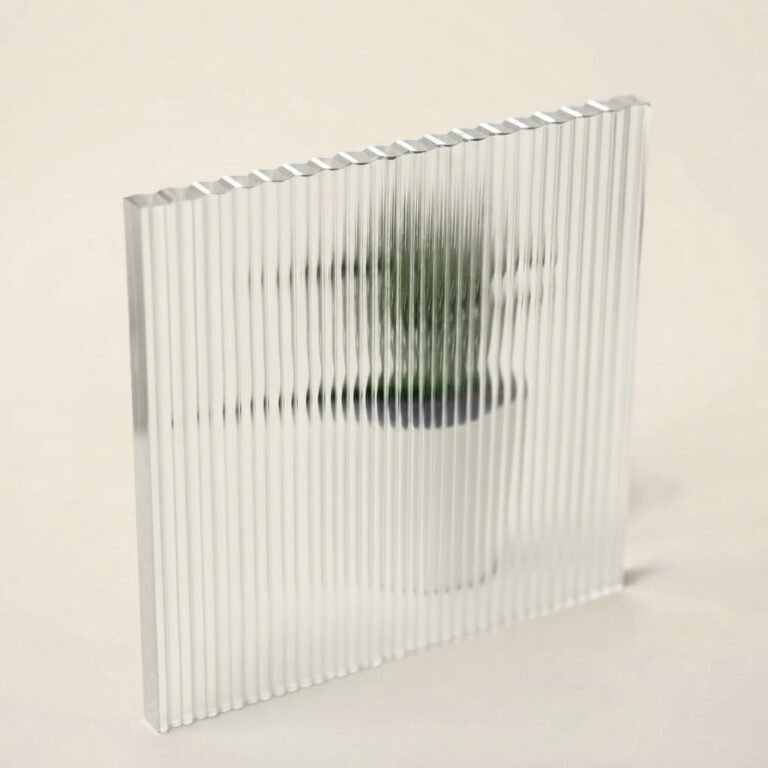
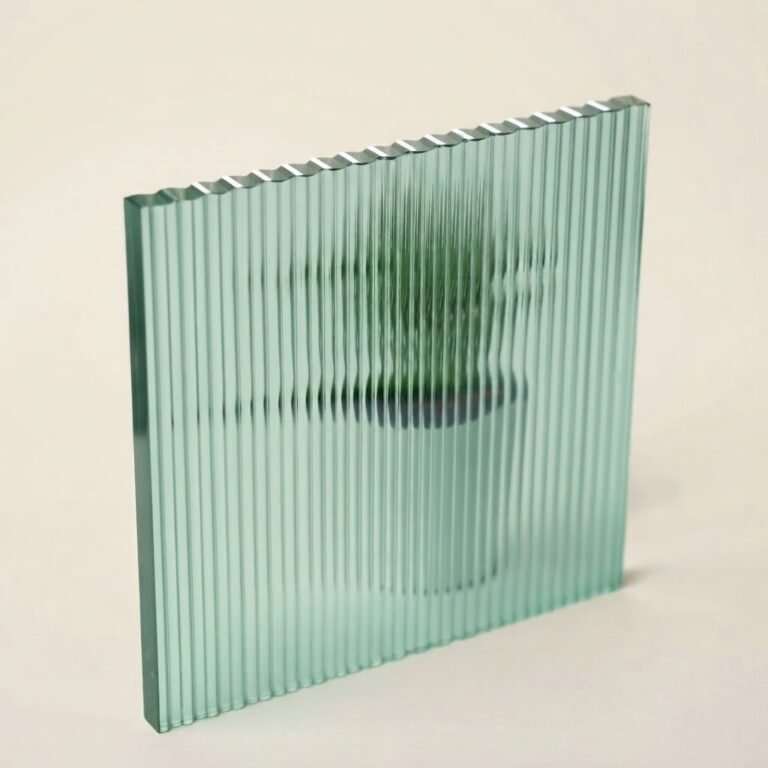
Reeded glass — also called fluted glass — has a run of parallel rounded ridges rolled into one face of the sheet. The ridges distort vision while letting almost all the light through, which is why it has moved from a period window detail to one of the most requested finishes in contemporary kitchens and joinery.
How much does reeded glass cost?
You do not have to ask. Pick a thickness below, type your width and length, and the price appears as you type. The rates we work from:
6mm reeded — from $351 per m²
10mm reeded — from $439 per m²
5mm reeded in low iron (no green tint) — from $468 per m²
Polished edges from $10 per linear metre, toughening from $17 per m²
Minimum billable area 0.5 m² per panel, with delivery across Melbourne metro, inner Geelong and metropolitan Sydney included in the price
6mm or 10mm?
6mm covers almost all cabinet and joinery work — kitchen doors, wardrobe fronts, display cabinets, internal screens. It is lighter, cheaper, and easy for a joiner to hang.
10mm is for frameless work: shower screens, room dividers and partitions that carry their own weight. It must be toughened for those uses. If you are unsure, our glass thickness guide walks through it.
What we stock: Narrowline
Our reeded range is Narrowline — a fine, closely spaced reed rather than a wide traditional flute. The tighter spacing gives more privacy, a cleaner modern look, and it works far better on small panels, where a wide reed would only fit two or three ridges across a cabinet door. It is the pattern people usually mean when they search for narrow line glass or narrow reed glass.
Full detail, a comparison against traditional wide-flute reeded glass, and answers on reed direction and which side faces out are on the Narrowline page.
Reeded or fluted glass: is there a difference?
No. Reeded and fluted are two names for the same glass: parallel ridges rolled into one face of the sheet. Reeded is the usual trade term in Australia, fluted is common in interior design magazines and UK sites, and some people call it ribbed glass. If your plans say any of the three, this is the range.
Where reeded glass works best
Kitchen and bar cabinet doors — hides what is inside while keeping the joinery light.
Internal doors and sidelights — privacy between rooms without losing daylight.
Shower screens and bathroom partitions — usually 10mm, toughened.
Room dividers, wardrobe doors and display cabinets.
Common questions
How private is reeded glass? It blurs shapes and detail, more so the further you stand from it, but it is not fully opaque. Where you need complete privacy, such as a bathroom window, frosted glass is the better choice.
Can reeded glass be toughened? Yes, and it must be for doors, shower screens and panels low to the floor. Choose toughening when you order, because glass cannot be cut after it has been toughened.
Do you deliver reeded glass to Sydney? Yes. Delivery is included in the price across Melbourne metro, inner Geelong and metropolitan Sydney. See glass cut to size Sydney or glass cut to size Melbourne.
Before you order
The reeds run one way only. Tell us whether they should follow the height or the width of your panel. For cabinet doors, vertical is almost always right.
Green striping. Reeded glass is thicker at every ridge, and standard float glass concentrates its green cast in exactly those ridges. On a large panel in strong light that can read as faint striping; on cabinet doors it is rarely noticeable. The low iron version removes it entirely.
Safety glass. Shower screens, doors, and any panel with glass below 500mm from floor level must be toughened under AS 1288 — see when Australian Standards require safety glass.
Also worth reading: reeded glass for cabinet doors.
We do not provide structural or engineering advice — for shower screens, doors and any application covered by AS 1288, confirm the thickness and glass type with your installer or a qualified professional before ordering.